

Interview with Daniel Kazakov — Founder of Ravelin3D
In this conversation, Daniel Kazakov, the founder of Ravelin3D, shares his journey from a teenage gamer fascinated by Wolfenstein 3D and Half-Life to leading an international studio creating high-end architectural visualizations for developers and architects worldwide. He talks about early struggles, bold decisions, and the inspirations that shaped his vision of turning imagination into photorealistic space.
Personal Story and Journey into 3D Visualization
How did you find your way into the world of 3D visualization?
Since childhood, I dreamed of creating video games. My best friend and I spent countless hours on one shared computer, taking turns playing Wolfenstein 3D — he’d shoot, I’d open the doors — later came Quake , Doom , Half-Life . Those games were pure magic for us. I can still remember long evenings on his balcony, playing until our parents literally dragged us away.
When I finally got my own PC in 1999 — first running MS-DOS, then Windows 98 — it felt like a life-changing moment. I installed one of my favorite games at the time, Commandos , a tactical WWII strategy, and played it for weeks straight. That period sparked my curiosity for programming. I started experimenting with BASIC and Turbo Pascal, later discovering Delphi thanks to my friend’s father. I even saved my lunch money to buy Delphi for Dummies .
Coding fascinated me, but I was never a 100% tech person. I understood the logic, but complex algorithms and math weren’t my strong side. Still, by age 15, I was already earning small freelance income — designing simple websites, creating banners, even modeling basic 3D objects. It was 2005, the dawn of global freelancing. There wasn’t much money in it yet, but for a high-school student it was a dream — sometimes I earned as much in a week as my truck-driver father. I even worked during school breaks from the computer lab.
Around that time, I came across a magazine article about GTA III fan mods — which required 3ds Max 5. I saved up for a disk with the software and a tutorial book and started learning. It was tough — my English was weak, the internet was slow, and there were no YouTube tutorials back then. I learned by reading long text guides and asking for help on forums. What beginners now achieve in a couple of months took me more than three years to master.

When and why did you decide to start your own studio?
I was studying at the Marine Technical University in Saint Petersburg while freelancing in 3D and working part-time as a sales assistant at the airport — selling souvenirs like matryoshkas, shawls, and amber jewelry to tourists. It wasn’t a hard job, but the schedule was brutal — 16-hour shifts from 7 a.m. to 11 p.m. Still, the pay was great. I earned more in one day than many waiters made in a week, especially when sales were good.
That job also boosted my English skills and, more importantly, changed my mindset. I realized the world was open — if you’re smart and creative, you can earn from anywhere. But I also understood that I didn’t want to spend my life building someone else’s dream. I wanted to build my own.
So I made a bold decision — I quit and focused entirely on architectural visualization. I worked 16–18 hours a day, often skipping university classes. By my second year, I was already earning decent money creating 3D visuals — first for furniture factories, then interior and advertising renders, and finally exterior architecture. Around that time, I met my future business partner, Alexey Kondratyev.
By 2009, we were already doing projects internationally, and I was making around $1,000 a month — a solid income for a student back then. But balancing university and work became impossible. I realized that I could always finish my degree later, but the 3D industry was already showing great potential. So I made another big decision — I dropped out, launched the brand Ravelin3D , and dedicated myself fully to building the studio.
My parents were shocked. For people raised in the Soviet era, higher education was sacred. Leaving a prestigious university with a scholarship sounded insane. But years later, my mom actually joined the company — she now manages our accounting remotely and earns a comfortable income. Life has its irony. My first commercial projects back then looked something like this (laughs):

Who inspired you in architecture and design?
During the 2000s and early 2010s, I was captivated by the work of visionaries like Zaha Hadid , Norman Foster , Bjarke Ingels , and Tadao Ando . Their projects felt like something from another dimension — bold, fluid, and futuristic, yet deeply human.
When I created early 3D models inspired by their designs, it felt like touching the future with my own hands. Zaha Hadid’s parametric forms taught me that architecture could be emotional; Foster’s precision showed me the beauty of logic and structure; and BIG’s storytelling approach — turning buildings into narratives — made me realize that every rendering must convey more than just geometry.
These architects weren’t just shaping skylines; they were shaping how I saw space, light, and composition. Their influence pushed me to make Ravelin3D more than a visualization studio — to make it a bridge between an architect’s imagination and the real, emotional experience of a building.
About Ravelin3D and the Team
What was your vision when you founded Ravelin3D?
When we created Ravelin3D, our goal was to rethink the outdated and inefficient 3D visualization market of that time. Back then, most studios were slow, overpriced, and impersonal — so we wanted to build something very different: a studio with a human face, exceptional quality, and client-centered service.
It worked. Within just two years, we captured nearly 50% of the 3D visualization market in Saint Petersburg and around 15% in Moscow. Top developers and architectural agencies started working with us. We’d show up to meetings, take a test project — and after that, the client would stay with us permanently.
Starting in 2015, we began expanding internationally — partnering with leading architecture firms in the U.S., Europe, and the Middle East. We registered Ravelin LLC, broadened our service line to include web development for real estate, and explored AR and VR experiences.
Of course, it wasn’t a smooth road. There were failures, challenges, and long periods of rebuilding. But like a phoenix, we always came back stronger — improving processes, refining quality, and strengthening our culture.
Today, Ravelin3D collaborates with over 200 top architecture firms and developers worldwide and has completed more than 1,000 projects — from luxury residential communities to large-scale commercial developments.

What values and principles define your team today?
When I founded Ravelin back in 2007, my vision was to create a place where creativity meets precision — where artistry, technology, and architecture blend seamlessly to elevate every presentation into a visual experience.
Over the years, that vision has evolved into a clear philosophy: to be not just a service provider, but a creative partner. Today, our team of over 20 talented 3D artists, architects, and designers brings both artistic passion and technical mastery to every project — no matter the scale or complexity.
We’ve also developed our own internal quality system — something we call the “Method of 4”, which reflects the way we work:
- 4 rounds of feedback to polish every detail;
- First drafts delivered within 4 days, to ensure speed and agility;
- At least 4 professionals involved in every project — guaranteeing a multi-perspective, holistic result;
- And as a small tradition, every 4th rendering comes with a discount — our way of saying thank you for continued trust.
This approach ensures not just beautiful images — but a consistent, reliable process and a long-term partnership with every client.
What makes you most proud of your team?
What I’m proud of most is the people. I’ve been lucky to find incredible talents — and to build a structure where creativity and responsibility coexist. We’re still a studio with a human face: a team that truly cares about every client, every deadline, every presentation.
If you have an investor meeting or city board review on Monday morning, we’ll stay up all weekend if needed — because we genuinely care about your success. We’ve been in this industry since 2008, and we know exactly how much is at stake when a single image can influence funding or public approval.
Over the years, our visuals have helped hundreds of real estate projects secure investments and move into construction. That’s not just a marketing line — we’ve literally helped shape new communities around the world.
Most of our 3D artists have degrees in architecture or interior design, which allows us to go beyond visualization. Lately, we’ve been creating comprehensive design concepts — projects that start as ideas within Ravelin3D and later become real buildings and spaces.
We’re not a full architectural bureau yet — but we’ve grown far beyond a typical rendering studio. And while our concept design fees remain very accessible, these ideas often become multi-million-dollar projects for our clients.
Everything starts with an idea — and often, that idea is born at Ravelin3D.
Technologies & Development
What technologies, in your experience, have transformed the visualization market over the past 2-3 years?
In the last couple of years the architectural-visualization industry has seen several underlying shifts that are nothing short of game-changing. One is the rapid rise of real-time rendering engines (and their integration into BIM/AEC pipelines) which allow hugely faster iteration and feedback loops. Another is the proliferation of procedural and parametric generation workflows (for vegetation, urban context, materials) which used to be very manual but now are much more automated. A third is the increased use of cloud computing and render farms, enabling studios to scale up without massive on-premises hardware. Fourth, the adoption of AI-enabled tools (for image enhancement, denoising, texture generation, context infill) is radically reducing time-to-quality. And lastly, the move toward immersive/VR/AR deliverables is shifting client expectations from static imagery to interactive experiences. These developments are corroborated by recent industry surveys which show that AI is “here to stay” in arch-viz and that many firms are investing heavily in new tech. (Chaos Blog)
In short: the market is no longer just about “making a pretty picture” but about “efficient pipeline + rapid iteration + immersive communication”.
What role do AI and automation play in your studio today?
At Ravelin3D we have embraced automation and AI as core accelerators — not as replacements, but as enablers of higher creativity, speed and scale. Below are five of the most effective techniques we currently apply in our workflows:
- AI-people insertion / character population
We use AI tools and libraries (including lo-fi motion capture, adaptive posing, generative textures) to populate scenes with realistic human figures — saving hours that would be required for manual modelling, rigging and texturing. This improves the sense of life, scale and narrative in our renders. - AI sky/atmosphere & environmental context infill
Using generative models and procedural tools we automatically generate believable skies, atmospheric effects, vegetation overlays, and even complex backgrounds (urban or nature) that historically would require significant manual compositing. The result: more credible context faster. - Procedural material & texture generation + smart denoising
AI-powered denoisers (and material generators) allow us to iterate materials, lighting and textures in less time while maintaining high fidelity. For example, algorithms that reduce noise in path-traced renders and learn from past datasets are now standard in our pipeline. - Automated layout and scene generation
Leveraging parametric scripts and AI-driven generative design methods (for vegetation distribution, furniture layout, scene dressing) we can quickly populate complex scenes. This allows our 3D artists to focus on composition, storytelling and client-specific accents rather than repetitive tasks. - Interactive/VR & real-time feedback loops
We integrate automation and AI into real-time engines so that clients can view and comment on interactive versions of the scene, enabling faster revisions, better alignment, and fewer full re-renders. AI assists by generating multiple variants and handling routine updates to lighting, materials or entourage.
These techniques together let us deliver an architecture-driven visualization service with greater speed, flexibility and client alignment — while still maintaining aesthetic control and brand quality.
Have you encountered resistance when implementing new tools from your team or clients?
Honestly, not significantly. The genre of 3D visualization is inherently multi-software, multi-plugin and technology-driven — so our team is used to change and experimentation. The pace of development in our niche is so fast that we all know: if you don’t adopt newer methods, you risk falling to the sidelines. That awareness means our artists are actively self-studying new tools and techniques.
Of course, there are a few “veterans” in the team who are less eager to switch — they prefer tried-and-true methods and are excellent in their domain. But once they see newcomers using new software or AI-workflows and improving the results, they adapt quickly and their renderings become even better and more realistic.
In other words: change is continuous, but the team embraces it because success depends on it.

About Markets & Clients
What is happening now in the U.S. architectural 3D-visualization market?
The U.S. market for architectural 3D visualization is in a state of dynamic growth and transformation. Data show that the larger North American 3D-rendering market is projected to grow at a compound annual growth rate around 19–20% between 2025 and 2034.
In practical terms for architecture and real-estate development:
- Demand for high-quality visualization services continues to increase as developers and architects realise that compelling imagery provides a competitive edge in sales, approvals and funding.
- U.S. firms are more frequently expecting faster turnaround times, tighter budgets and more iterations, driven by rising project complexity and accelerated decision-cycles.
- Adoption of new technologies such as real-time engines, cloud rendering and AI-enhancements is higher among U.S. clients than many global peers — meaning that studios working with U.S. clients must be technologically savvy.
- There is also a trend toward experiential deliverables: not just still renders, but animations, interactive walkthroughs, VR/AR formats, and modules that serve both marketing and design-validation purposes. For example, industry insight shows still images remain dominant but real-time rendering is “gaining momentum” in arch-viz workflows.
- On the supply side, many U.S. architecture / real-estate firms are more willing to partner internationally (outsourced studios) but expect the same level of responsiveness, visual finesse and brand-sensitive service as local providers, which raises the bar on studios like ours.
In short: If you’re working in the U.S. market, you’re serving clients who expect precision, speed, storytelling and full technical fluency — the days of “one pretty render in six weeks” are effectively over.
Which industrial/architectural trends do you consider defining for 2025–2026?
Looking at the broader architectural visualization and design industry, several key trends are becoming defining for the 2025–2026 horizon:
- Hyper-realism & immersive storytelling – Clients increasingly expect visuals that aren’t just “nice pictures”, but experiences: hyper-real atmospheric lighting, weather, dynamic effects, believable human-scale life.
- Real-time rendering, digital twins & interactive deliverables – Real-time engines and digital twin workflows enable clients and stakeholders to engage with the architecture in a more fluid way (walkthroughs, live lighting/material variants, VR).
- Sustainability, smart-buildings & environmental context – The visualization is increasingly being used not just to show form, but performance: daylighting, energy, vegetation, surroundings. Renderings need to reflect these values.
- Cloud-based workflows, automation & AI – The infrastructure behind visualization is shifting: cloud rendering, automated scene assembly, AI denoising, parametric content. These improve efficiency and open the door to more iterations, more design options.
Smaller-scale unique projects + large developments with scale complexity – On one side, the boutique architectural-studio market is looking for unique, personal expressions (signature houses, show-pieces). On the other, large residential/mixed-use developments demand massive scale, optimization and integration of many data sources and assets. From a visualization studio perspective both are major growth zones and both demand different workflows.
Additionally: the rise of mixed-use, affordable housing, adaptive reuse in the U.S. means visualisation must support faster approvals, public-facing marketing, early stage investor decks.
All in all: The next two years will reward studios that can merge artistic expression, robust technical pipeline, and strategic collaboration with clients’ changing business models.
Which types of projects bring you the most satisfaction?
We enjoy working on two kinds of projects most of all:
Boutique, intimate architect-led projects: These are smaller, personal commissions by architects for their own portfolios — often experimental, rich in atmosphere (rain, fog, night, snow), atypical in form or presentation. They excite us because they feel unique, creative, and award-worthy.

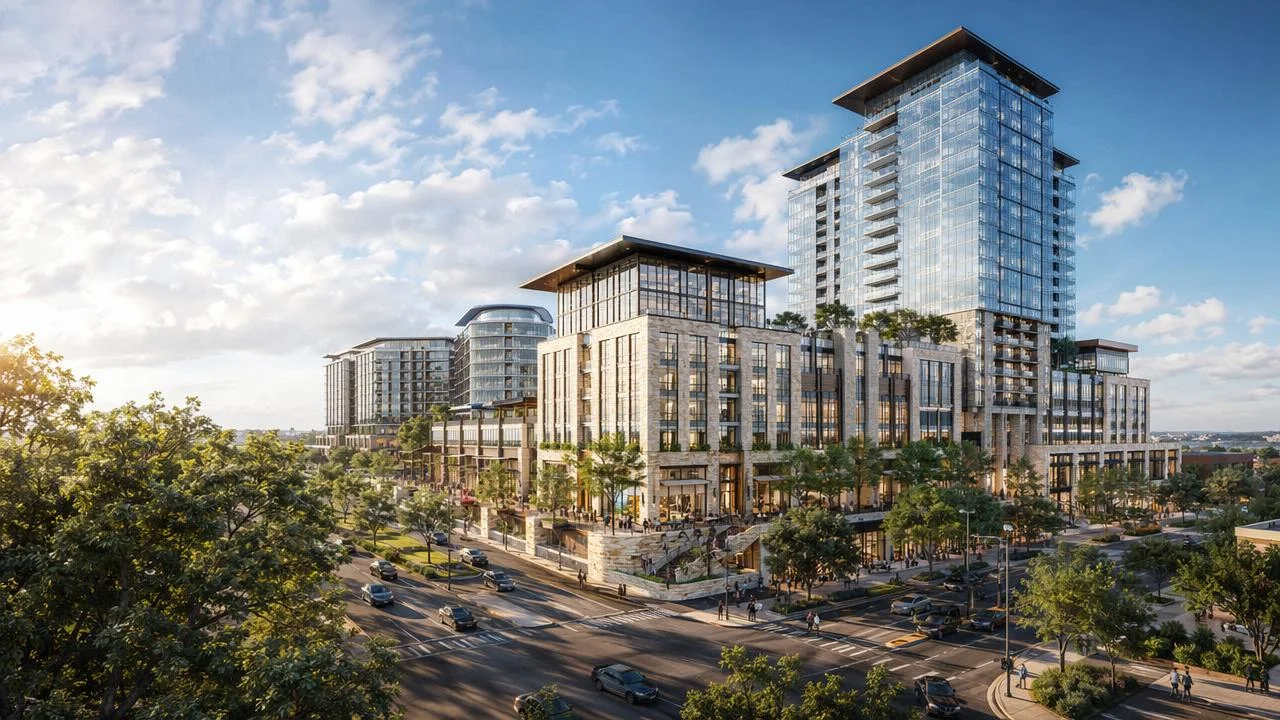
Large-scale developments: These are big residential complexes, hotels, entire neighbourhoods. The scale brings technological and logistical challenges: hundreds of buildings, billions of polygons, hundreds of thousands of plants, modeling down to door-handles and flower petals in gardens. Optimizing such scenes under tight timelines (often no more than two months) requires rock-solid business processes. The reward is high: full-turnkey deliverables (a dozen renders, a video, a 3D tour) can reach budgets starting at tens of thousands of dollars.
Both types energize us — the small projects for their creative freedom and signature feel, the large ones for their complexity, optimization and impact. Together they define the scope and ambition of what we do at Ravelin3D.

Projects & Case Studies
Could you share some of the recent projects you’re particularly proud of?
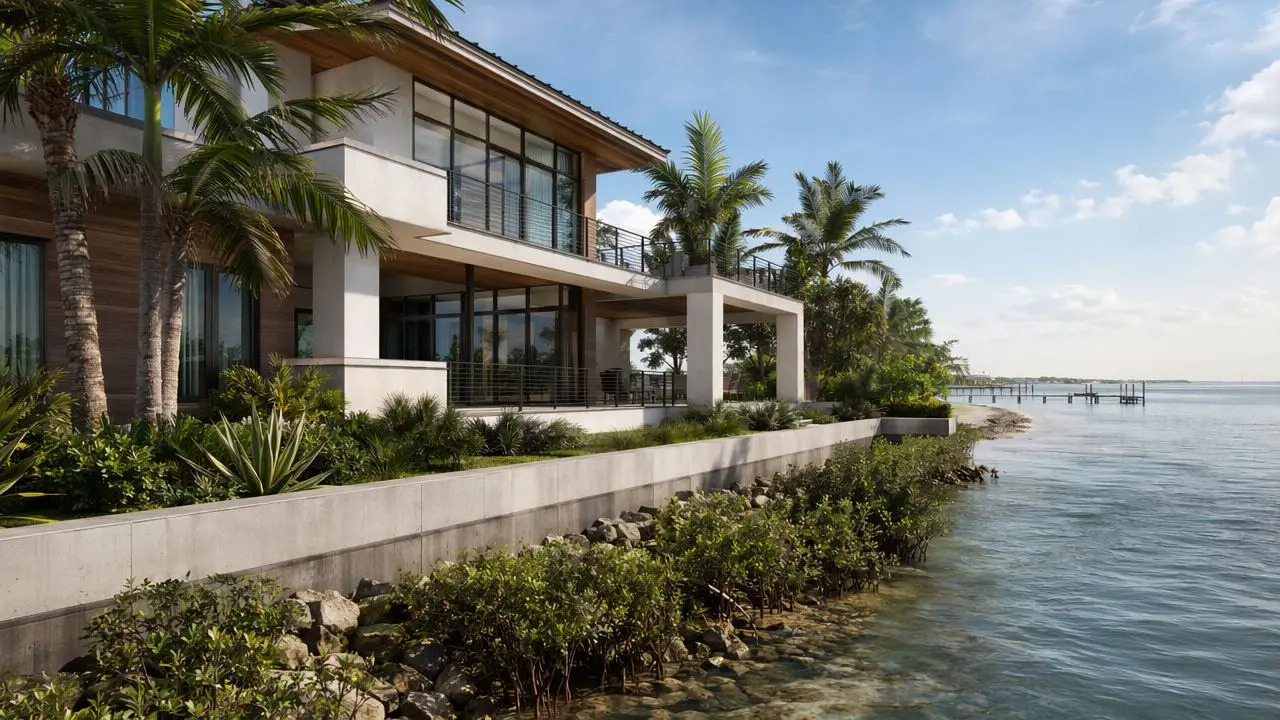
Yes, absolutely. One of our recent highlights was the Caribbean Naples project for Linda and Rich Donnelly. It was a complex, high-expectation commission — but the outcome became a real game changer for everyone involved.
Our team produced around 12 detailed 3D renderings and a two-minute cinematic video, which turned out to be more than just beautiful visuals. They revealed design challenges early in the process — such as an oversized garage structure and overall proportions that felt slightly off compared to the main house — long before construction or marketing even began.
Because of that visual clarity, the clients and architects were able to make meaningful improvements: a more layered and dramatic ceiling concept in the great room, better-scaled interior details like rug sizing, and refined exterior balance.
In the end, the renderings not only saved significant time and money, but also elevated the architectural quality of the final design. It’s a perfect example of how visualization can influence real architectural outcomes — not just presentations.
Have you had any “difficult” cases that turned into unexpected success stories?
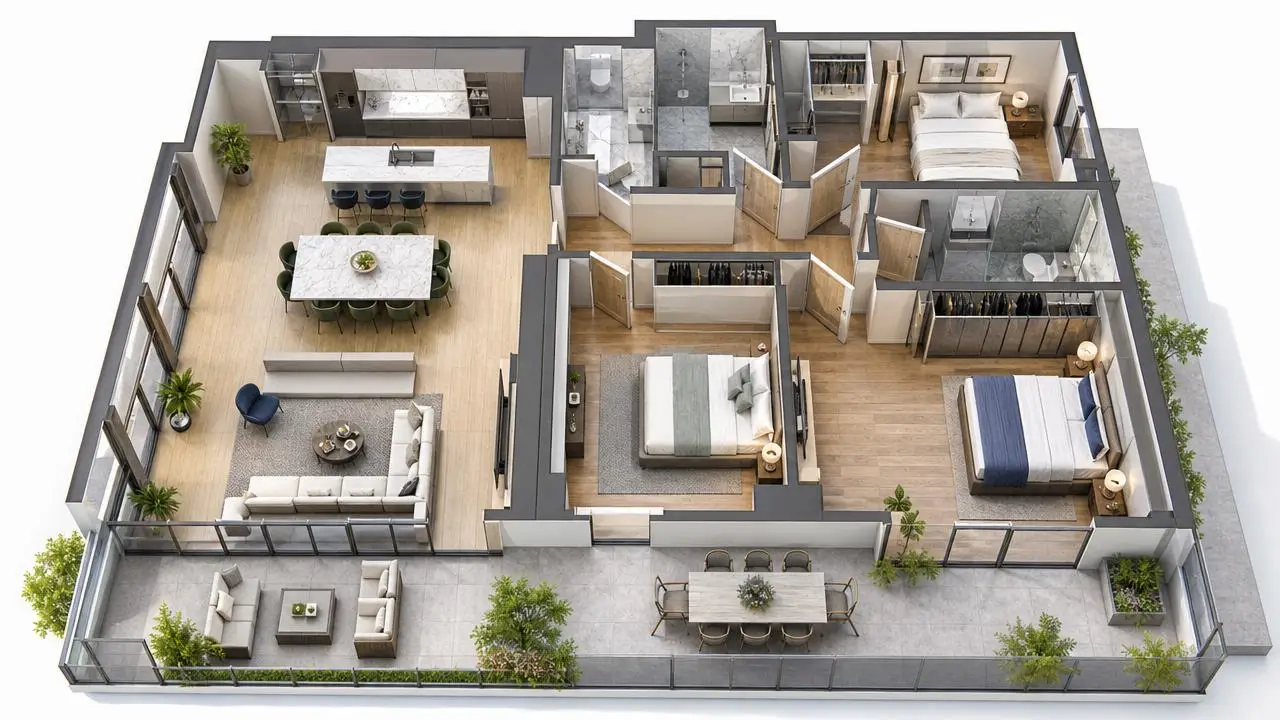
Yes — one of my favorite examples happened recently. We received a request to develop a residential apartment concept in a highly promising ROI zone in Jersey City. Normally, our studio focuses on visualization rather than full façade design, but since many of our artists hold degrees in architecture and interior design, we decided to take on the creative challenge.
The result was a bold and commercially strong 12-story concept that helped our client win a competitive land tender. That project is now moving into active development — right in one of the most sought-after areas of New Jersey.
Moments like these make me incredibly proud. When our visuals help a client secure a multimillion-dollar opportunity, that’s the best proof that what we do has real business value — not just artistic appeal. These clients often stay with us for years, growing alongside us as their trusted visualization partner.

Leadership & Personality
What qualities do you value most in your team members?
In creative and design-driven industries like ours, technical skill is essential — but attitude matters even more. The qualities I value most are curiosity, accountability, and collaboration.
I admire people who are genuinely curious — those who keep learning, exploring new tools, and never settle for “good enough.” Accountability is equally vital: being able to take ownership of your work, communicate clearly, and stand by your decisions. And, of course, collaboration — the ability to listen, share ideas, and support others — is what transforms a group of talented individuals into a strong creative team.
In architectural visualization, where art meets technology and business, you need people who are both artists and problem-solvers, who can balance aesthetics with practical delivery. That’s the culture we’ve built at Ravelin3D.
How do you maintain a balance between creativity and discipline in business?
It’s one of the biggest challenges in any creative company — to stay inspired while keeping the business efficient and sustainable.
At Ravelin3D, we’ve learned that success lies in structure. Our artists have the freedom to experiment and express creativity — that’s what gives our visuals their emotion and soul. But at the same time, our management team maintains strict control over deadlines, budgets, and ROI. This dual approach creates what I call a “symbiosis of art and efficiency.”
We know that even the most beautiful renderings lose their value if delivered late or over budget. So our process is designed to protect both sides — creative exploration and business discipline.
Of course, we’re not perfect. Sometimes the balance tilts — creativity takes over, or schedules tighten too much. But we’re human, and we learn from each project, becoming stronger and more aligned each time.
What personal habits or hobbies help you stay productive and creative?
I’m a very structured and organized person. My best friends are my digital notebook and calendar — I track every task, deadline, and expense meticulously. That financial and operational discipline gives me clarity and freedom to focus on creative strategy and growth.
Outside of work, I recharge through sports and active life. I play tennis, run, and hit the gym regularly. Physical energy fuels mental energy — that’s my rule. I also love traveling, hiking, and exploring new cultures, which constantly feeds my creative vision.
I’ll admit — I’m a bit of a workaholic, and I’m deeply grateful to my family for understanding and supporting me. The biggest change in my life came with the birth of my daughter — she’s my daily reminder of what truly matters. Whenever I get time off, I spend it with her. Those moments bring me back to balance and give me the motivation to build, create, and move forward.

Practical Advice
Your top three tips for clients choosing a 3D rendering studio.
If I had to narrow it down to three key recommendations, I’d say this:
- Start with clarity, not visuals.
Before contacting any studio, document exactly what you need. Collect full architectural drawings, define the project’s purpose — investor pitch, pre-sales, or permit submission — and outline every deliverable in detail. Vague briefs are the number-one reason projects run late or over budget. The clearer your materials and goals, the faster and cheaper the process becomes. - Evaluate quality, workflow, and communication — not just price.
A strong portfolio should show more than beautiful images. Look for consistent realism, atmosphere, and storytelling across multiple projects. Ask about their workflow: do they offer clay drafts, structured revision rounds, and clear approval checkpoints? A professional studio should be as strong in communication as it is in artistry. - Think of your rendering partner as a long-term ally.
The best results come from collaboration. Choose a team that understands your business objectives — sales velocity, investor confidence, brand positioning — and can scale with your future projects. Reliable partners maintain stylistic consistency, handle multiple phases seamlessly, and become an extension of your own design and marketing team.
The right visualization studio isn’t just a supplier; it’s a strategic partner that can accelerate sales, strengthen investor trust, and define how your architecture is perceived in the market.
What should clients avoid if they want to get the best result — not just save on cost?
The biggest mistake is chasing the cheapest option or expecting “ten photorealistic renderings in three days.” Unrealistic budgets and timelines always lead to disappointment. Don’t start a project with incomplete materials, unclear decision-makers, or multiple people giving conflicting feedback — that’s how timelines explode.
Also, never ignore red flags: inconsistent portfolios, slow replies, or vague quotes with no breakdown. If communication is weak before the contract, it will be worse during production.
Instead, look for transparency and structure. Ask about payment milestones, revision policy, and intellectual-property terms. Make sure the studio uses secure file sharing and maintains backups. The best results always come when you treat visualization as a marketing investment, not a procurement cost.

The Future & Ambitions
What goals do you and your studio have for the coming years?
My dream is to grow beyond visualization — toward development itself.
When I started, I was modeling furniture and learning the craft of rendering. Over the years, Ravelin3D became a mature, international studio. Now I want our work to become more tangible — to build the spaces we visualize.
We’ve already started collaborating with a few interior studios, offering design supervision and project oversight, though this service is still in a pilot stage and currently available only to our most loyal clients in Florida, New York, and New Jersey. It’s a complex process, but incredibly rewarding. My ultimate goal is to reach the point where we can develop and realize our own architectural concepts — not just visualize them.
Do you have a dream project you’d love to create one day?
Yes — I’d love to design a small residential community of boutique 2- to 3-story club-style houses with beautifully landscaped grounds and an emphasis on wellbeing.
A place where architecture naturally supports a healthy, active lifestyle — with jogging paths, open sports areas, swimming pools, and tennis courts — an environment that makes you feel balanced, energetic, and inspired just by living there.
It would be a bio-sustainable micro-community, a model of how thoughtful design and urban planning can genuinely improve everyday life. That’s the kind of project I dream of building someday — where design, health, and happiness coexist.

Quick Blitz
Your favorite piece of architecture?
Definitely the Empire State Building. I love it so much that I even made a 90-minute documentary about it — it’s a timeless symbol of human ambition and creativity. Watch it here →
Your favorite tool for work?
A walk in the park, a pen, and a notebook. That’s where 80% of my ideas and new projects are born — away from screens, in fresh air and movement.
One piece of advice for young 3D artists?
Don’t be afraid to experiment. Don’t just follow tutorials — build your own vision, your own aesthetic language. And start using AI tools early — they’ll multiply your productivity and creativity.
Oh, and of course — follow us on Instagram and YouTube for more insights and inspiration. Good luck out there!

'%3e%3cpath%20d='M23.3971%207.52388C22.0124%2010.1548%2018.9371%2014.2051%2016.3629%2016.8761C13.3954%2020.0856%206.39983%2024.4744%206.39983%2024.4744C5.85983%2024.7578%204.36066%2024.7794%203.94857%2024.3677L2.45719%2022.8802C2.14928%2022.3657%202.01074%2021.769%202.45719%2021.3931L5.44101%2019.1608C5.94593%2018.8196%206.5203%2018.7505%206.93239%2019.1612L8.77101%2020.9938C9.20365%2020.6901%2016.1096%2016.1642%2019.9512%209.93333L18.0687%208.05537C17.6566%207.6447%2017.7267%207.07175%2018.0687%206.56754L20.3066%203.59258C20.7187%203.04266%2021.3866%203.1812%2021.798%203.59258L23.2904%205.0797C23.8751%205.62856%2023.7057%206.90876%2023.3971%207.52388ZM24.5685%204.01742L22.2239%201.6799C21.5772%201.0336%2020.527%201.03396%2019.8796%201.6799L16.3633%206.35565C15.8261%207.14616%2015.7163%208.04758%2016.3629%208.69352L17.7983%2010.1247C16.7342%2011.5498%2015.4572%2013.1046%2014.0194%2014.5382C12.3937%2016.1589%2010.5852%2017.6329%208.95916%2018.8433L7.57196%2017.4611C6.9253%2016.8148%206.02176%2016.9239%205.2277%2017.4611L0.538854%2020.9675C-0.247056%2021.5093%20-0.108866%2022.6595%200.538854%2023.3058L2.8831%2025.6426C4.17853%2026.9345%205.86231%2026.521%207.57196%2025.6426C7.57196%2025.6426%2012.747%2022.7459%2017.1775%2018.3278C21.3451%2014.1715%2024.5685%208.69352%2024.5685%208.69352C25.2403%206.84994%2025.8636%205.30896%2024.5685%204.01742Z'%20fill='%23FFAA00'/%3e%3c/g%3e%3cdefs%3e%3cclipPath%20id='clip0_2729_2176'%3e%3crect%20width='26'%20height='26'%20fill='white'%20transform='translate(0%200.463867)'/%3e%3c/clipPath%3e%3c/defs%3e%3c/svg%3e) +1 (646) 693 0048
+1 (646) 693 0048
 main@ravelin3d.com